Thousands of Indian gamblers lose money through online gambling fraud. They deposit funds into betting websites, casino apps, or digital wallets, but later discover they cannot recover their money. Some also notice unauthorized transactions in their accounts. Every gambler should maintain records. The instructions outline how to preserve evidence, track complaints, dispute UPI and card payments, and report issues to authorities.
Reporting Online Gambling Fraud In India
Individuals in India who experience online gambling fraud may report it as online financial fraud through national cybercrime channels. They can either call the helpline at 1930 or file a complaint using the National Cyber Crime Reporting Portal. The following table outlines the steps for submitting a complaint.
| Aspect | Detail |
|---|---|
| Primary complaint channel | National Cyber Crime Portal |
| Emergency helpline number | 1930 for immediate reporting |
| Fraud category classification | Online financial fraud |
| Blocked withdrawal type | Withheld winnings or balance |
| Advance fee demand | Extra payment demanded at withdrawal stage |
| Unauthorised transaction method | UPI or wallet deduction |
| Payment instrument affected | Cards, wallets, net banking |
| Bank notification requirement | Immediate transaction dispute report |
| Transaction identifier needed | 12-digit UTR or reference |
| Typical disputed amount | Variable rupee amounts |
| Reporting timeframe recommendation | Within 24 hours detection |
| Complaint acknowledgement format | SMS or email reference |
| Evidence preservation requirement | Screenshots and transaction records |
| Receiving authority type | State or Union Territory |
Using The National Cyber Crime Reporting Portal
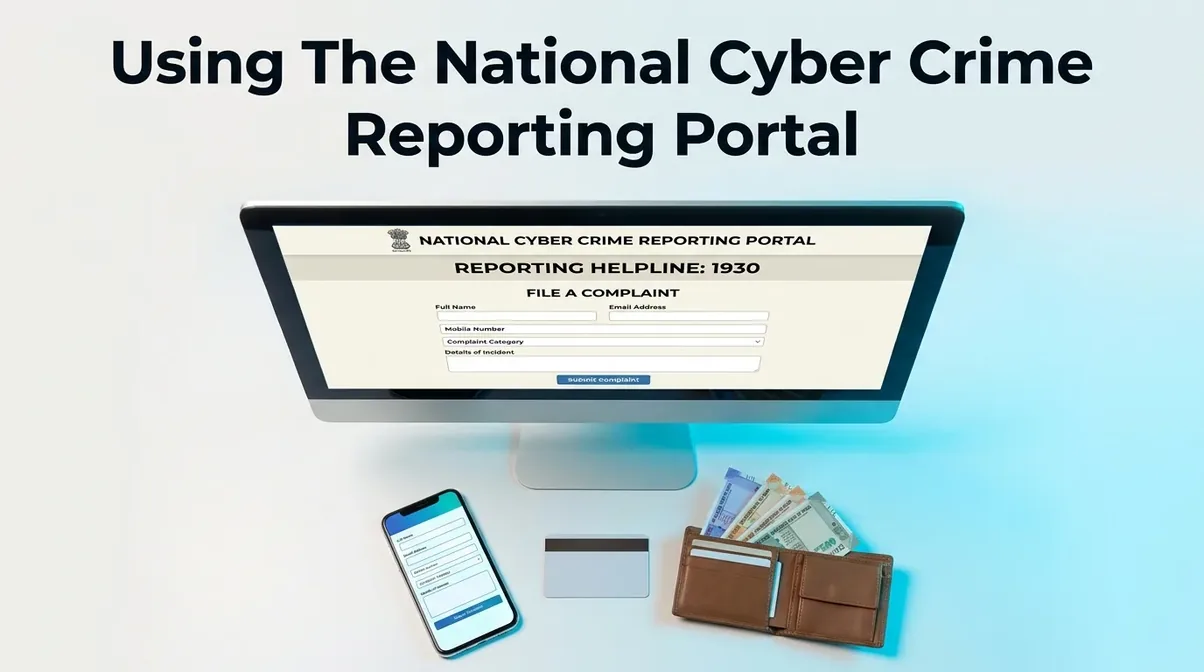
In India, the National Cyber Crime Reporting Portal is the website for people to report online gambling fraud. Anyone in any state can use this site to send reports about fraud, including disputes over payment transactions:
- Go to the National Cyber Crime Reporting Portal. Type the website address into your browser.
- Select the fraud reporting option from the list of available categories.
- Register with your mobile number and enter the one-time password sent to your device when prompted.
- Pick the category called online financial fraud.
- Select the payment sub-category that matches the transaction. Choose from UPI, debit card, credit card, or digital wallet.
- Review the complaint form carefully before submitting it. Confirm that all names, dates, and attached documents are accurate.
Information To Keep Ready For Filing
Gather accurate transaction and identity details before submitting a complaint. Proper preparation reduces processing delays and avoids rejection. Complete records support faster handling.
- Bank or wallet name;
- Transaction ID or UTR;
- Transaction date and time;
- Disputed amount in ₹;
- Government ID type and number;
- Registered address details;
- Registered mobile number;
- Short description of events.
Informing Banks Wallets And UPI Providers
Submit complaints promptly to banks, wallets, or UPI applications. Complaints allow staff to freeze disputed amounts and establish records with financial institutions.
- Locate the official customer care channel;
- Report the disputed transaction as unauthorised or fraudulent;
- Request written acknowledgement or complaint number;
- Note the complaint date and time;
- Ask for temporary blocking of affected instruments;
- Save all SMS or email confirmations.
Online Complaint Submission Steps
The victim collects all information and evidence, then fills out the online complaint form.
- Enter your mobile number to log in. Use the number you registered.
- Access the complaint filing section from the main menu.
- Accept the acknowledgement statement displayed on screen.
- Select the “other cybercrime” category. You can choose the financial fraud category as well.
- Choose the payment mode sub-category that corresponds to the transaction.
- Enter the date when the incident occurred, then specify the exact time.
- The description must contain at least 200 characters. Use complete statements throughout. This requirement provides sufficient information for understanding. Count the characters before submitting.
- Submit identity document images in the specified formats. Provide transaction proofs and add banking records.
- Preview the complaint and verify all entered information.
- Submit the form to complete the registration process.
Tracking The Cybercrime Complaint Reference
After you submit, the team creates an acknowledgement number and sends it to your contact details by SMS or email. Save this number. Use the acknowledgement number if you need to track progress or give updates to authorities about the case.
- Accessing the report-and-track page;
- Checking regular status updates;
- Providing the number to police;
- Quoting it in bank follow-ups;
- Saving it with case documents.
Reporting Details Of Suspected Fraudsters
The system gathers information on identifiers associated with fraudsters, and individuals may provide details about fraudsters. Authorities use submitted details to link multiple complaints that reference the same contacts, accounts, or channels.
- Gambling website URLs or domain names;
- Application names or package identifiers;
- Mobile numbers used for contact;
- Email addresses from fraudster communication;
- UPI IDs linked to payments;
- Bank account numbers or IFSC codes;
- Telegram handles or social media profiles;
- SMS sender IDs or email headers.
Frequent Mistakes In Online Gambling Fraud Reporting
Preventable errors during submission often result in complaints being overlooked. Inaccurate transaction records delay the investigation process. If personal information is entered incorrectly, the case becomes weaker.
- Missing UTR or transaction reference;
- Incorrect transaction date provided;
- Wrong disputed amount entered;
- Incomplete bank statements uploaded;
- Incident description under 200 characters;
- Website URLs or chats excluded;
- Inconsistent personal banking data;
- Acknowledgement reference not saved.
Chronological Checklist After Detecting Online Gambling Fraud
When someone discovers fraud, a specific order of actions must be followed. This sequence guides victims in their response and supports the reporting and management of complaints. Completing each step in turn helps victims avoid overlooking important tasks:
- Record the incident’s date, time, transaction amount, and payment method used.
- To report cyber-fraud, call 1930. The helpline provides assistance.
- Capture a screenshot of each confirmed transaction. Include account information and any related messages.
- Report the issue to the bank, notify the wallet provider and UPI service about the transaction, and request a complaint reference from each.
- Change all passwords and PINs for gambling and other accounts linked to the compromised payment method.
- Present identity documents. Attach bank statements. Include transaction receipts and records that verify the address.
- Enter your mobile number to register on the National Cyber Crime Reporting Portal. Register first, then enter the one-time password.
- Send your complaint through the system within 24 hours after you find the fraud.
- Save the acknowledgement number after submission. Keep the login identifier after submission.
- Conduct status checks as scheduled, using the report-and-track function. If there are no updates, contact the assigned escalation points.