
Many Indian users download casino or betting applications in India. Some applications are fake and aim to steal money or personal data. Identifying a fake betting app before installation is essential for protecting sensitive information and avoiding financial losses. Practical checks before depositing funds or sharing personal details can reduce exposure to fraudulent applications. Learn how to recognize suspicious betting apps, check their legitimacy, and protect your personal information before downloading or making any payments!
Basic Signs Of A Fake Betting App
Fraudulent applications repeat patterns in store listings, installation steps, and payment screens. Indian users can look for these patterns to avoid losing money or leaking data before using an application.
| Warning Sign | What It Shows |
|---|---|
| Copied brand name | Imitation of real service |
| Spelling errors present | Unprofessional development quality |
| External payment link | Redirect to unverified page |
| Guaranteed winnings promised | Unrealistic promotional claim |
| Missing company details | Hidden identity |
| Sudden store removal | Policy violation confirmed |
| Play Protect alerts | Security risk detected |
Checking The App Publisher Identity
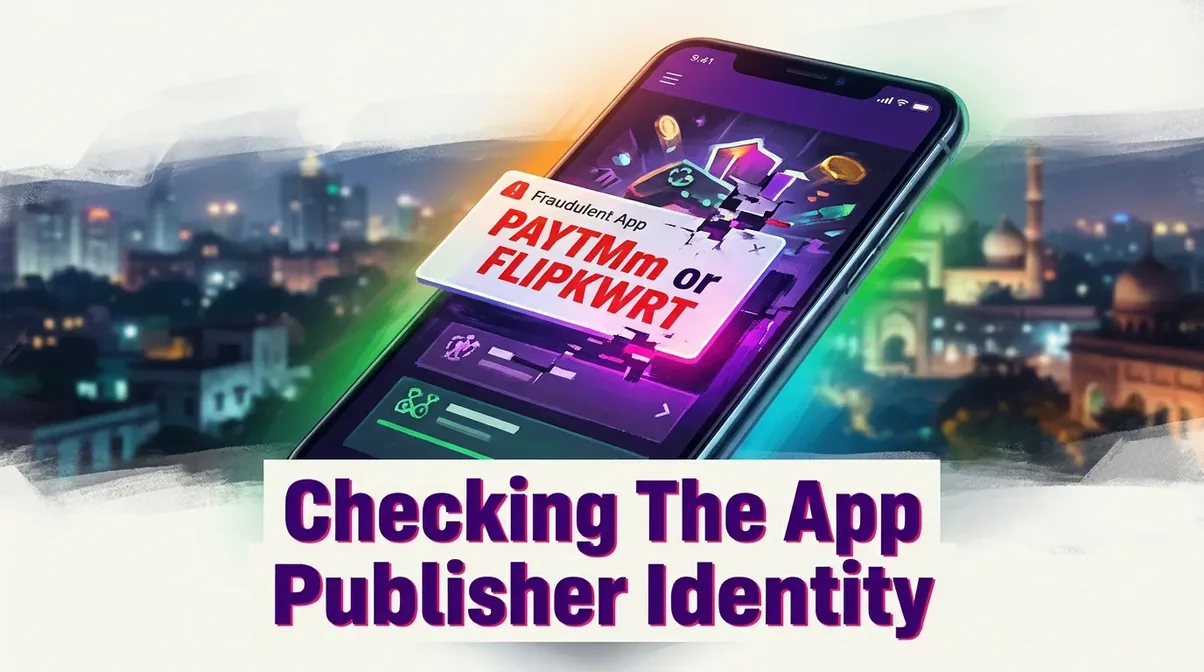
Users can view the publisher name, a contact email, and the release history. The application listing page also provides details about authenticity:
- Read the complete publisher name displayed on the application listing page;
- Compare the displayed developer name with the entity listed on the official website;
- Search the publisher’s history for frequent name modifications;
- Check previous applications released under the same developer account;
- Verify that contact addresses use professional domains rather than generic free email services;
- Confirm that recent updates contain professional descriptions;
- Confirm the developer’s claimed registration information through independent official records.
Checking Website And Domain Information
Many betting apps direct users to potentially fraudulent websites. Users should look for warning signs in the domain when using Indian rupees for online deposits, as careful examination of the domain can reveal inconsistencies not shown in store listings:
- Extra numbers inserted in domain;
- Misspelled brand or frequent typos;
- Multiple redirects between different addresses;
- Unfinished pages or placeholder text;
- Missing terms or privacy page;
- Support email uses unrelated domain;
- Very recent registration date;
- Excessive hyphens or unusual extensions.
Evaluating Bonus Offers For Possible Fraud
Promotional offers may appear suspicious if they make claims that do not seem realistic or create a sense of urgency. Consumers should look for these signs, as fraudsters often use such tactics in their applications:
- Guaranteed profit wording;
- Huge deposit match percentage;
- Deposit immediately countdown;
- Referral-only earning focus;
- Repeated extra deposit for withdrawal;
- Celebrity images without source;
- Prize messages from unknown numbers.
Verifying Payment And Withdrawal Behaviour
Users should review how the application processes transactions before sending money. If the recipient’s name does not change at any stage, this indicates the transaction is genuine. Indian consumers must pay attention to any differences in deposit or release procedures. They should also keep records of all money exchanges and decline any requests for authentication credentials:
- Confirm payee names. Check whether the displayed recipient matches the advertised business across all payment screens and receipts;
- Compare payment details over time. Record account numbers and UPI identifiers from each transaction to detect sudden substitutions;
- Keep screenshots of UPI or bank transfers. Preserve transaction references, timestamps, and confirmation messages as permanent evidence;
- Attempt small withdrawals first. Test the release process with minimal amounts prior to depositing larger sums;
- Refuse requests for PIN or OTP. RBI confirms that legitimate services never ask for one-time passwords or personal identification numbers;
- Note any demand for extra deposits prior to release of winnings. Withdrawal conditions requiring additional transfers indicate fraudulent systems.
Spotting Manipulated Ratings And Reviews
Certain groups collaborate to inflate store ratings, which can mislead Indian consumers. Some operators organize campaigns that conceal issues related to withdrawals or payments. Others leave comments that make it difficult for people to locate accurate information. Researchers detect coordinated manipulation by examining different sections of the article for traces:
- Multiple entries appear on the same date;
- Identical phrases repeat across different accounts;
- Five-star entries contain no usage details;
- Sudden rating jumps occur within days;
- Recent negative comments describe withdrawal refusals;
- Reviewers redirect readers toward unrelated applications;
- Download counts alone provide weak verification evidence.
Using Customer Support To Test Reliability
People may contact support with questions before sending money or sharing personal information. Staff respond to these inquiries, allowing people to assess whether the operation is trustworthy and well managed. The responses also reflect how staff manage documentation. Staff can provide information about withdrawals, registration, or transactions. Support interactions may reveal issues, and issues with reliability may be identified:
- Scripted replies only – Support repeats identical messages and avoids direct answers to specific withdrawal or account questions;
- Refusal to name company – Representatives decline to identify the registered legal entity or licensing jurisdiction;
- Unclear withdrawal rules – Support provides inconsistent or vague explanations about fund release conditions and timelines;
- Constant push for extra deposits – Agents insist on additional transfers to unlock withdrawals or bonuses without documented justification;
- No written transaction explanation – Support refuses to provide detailed receipts, payment references, or formal correspondence regarding transactions;
- Contacts using personal numbers – Representatives communicate through personal mobile numbers or unverified messaging accounts instead of official channels;
- Impersonation attempts – Support claims affiliation with banks, regulators, or government agencies to pressure immediate action.
Identifying Fake Approvals And Copied Designs
Some scam apps use fake seals and copy color schemes or logos to appear trustworthy. In India, scammers take elements from real businesses, which misleads people when they check the app:
- Random approval badges appear without verifiable registration numbers;
- Logos display without licence details or reference codes;
- Certificates show mismatched company names or inconsistent dates;
- Spelling changes appear in application titles to create near-identical brands;
- Identical colour schemes replicate another website’s visual appearance;
- Support email addresses do not match the advertised name;
- Misaligned visual identity reveals inconsistent branding across pages;
- Copied icons and screenshots conceal different payment recipients.