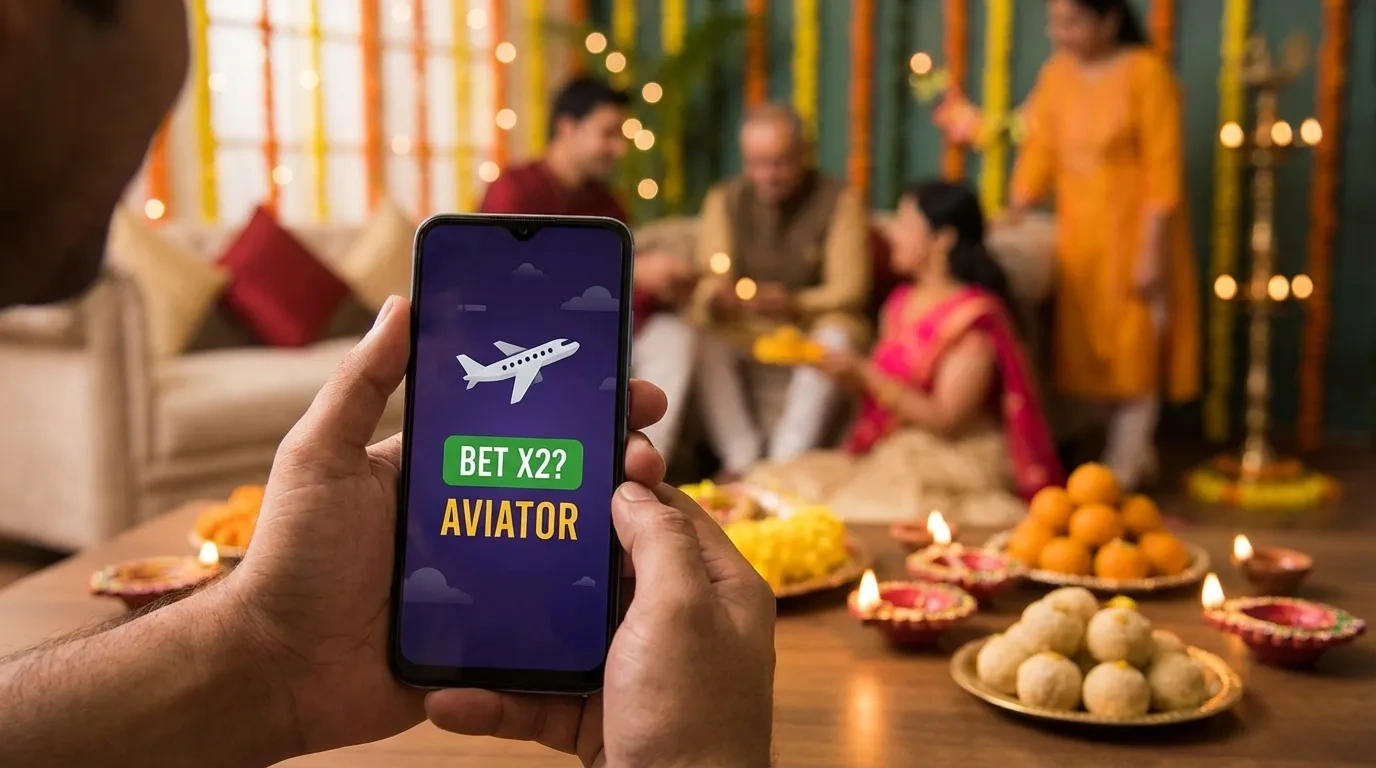
In India, many sincerely believe that during major holidays, the game’s algorithms become more lenient and wins become more frequent. This applies to the Aviator crash game as well, where players hope to catch high multipliers on the wave of general excitement. However, the technical reality of the servers differs greatly from popular superstitions. Let’s examine why the mathematical model doesn’t change based on the calendar and whether it’s worth risking your budget in search of the mythical generosity of the software code.
Why the Thrill Awakens at Diwali
Diwali celebrations are always accompanied by a special atmosphere, when luck seems almost tangible. In Indian culture, this period is associated with the arrival of prosperity, which prompts many to gamble and test their luck. When lights are ablaze all around and friends’ faces glow with joy, the brain suppresses rational fears. This state creates fertile ground for believing in the ‘special’ behaviour of gaming software, although in reality it is merely our perception of reality.
Increased user activity during the festive season creates the illusion that there are more wins. Imagine that usually a hundred people log into the game, but during the holidays – thousands. The number of messages about big wins in the chat will increase, but this does not change the odds for any individual player. If someone has hit a big multiplier, it is a result of mathematics, not the server’s mood. Marketing campaigns merely reinforce this feeling, but behind the flashy visuals lies the same strict programme code.
How the Algorithms Actually Work
To understand why the algorithms don’t change during the holidays, you need to look at the inner workings of the game. Any modern platform uses Provably Fair technology, which guarantees that the settings remain unchanged at all times. This means that the developer cannot press a button and make the game ‘kinder’ for a couple of days just for the sake of the holiday. The code operates autonomously, and its task is to produce random results within the pre-set return percentage.
Many people mistakenly believe that the prize pool accumulated over the festive period is distributed more generously. In reality, the algorithm has no idea what day it is. The random number generator in the Aviator crash game produces values based on formulas that have undergone rigorous auditing. Here are the key points that always remain consistent:
- The return-to-player (RTP) percentage is fixed in the settings and does not change for promotional purposes.
- The method of number generation depends on hashes, not on the number of people online.
- The plane’s take-off speed is determined before the round begins and is not adjusted to suit the player.
These parameters form the foundation of fair play. Changing them would undermine the trust of regulators. Remember: you are facing the same mathematical model as you were a month ago.
The Trap of Doubling Bets
Many Aviator players make the mistake of thinking that a holiday is a reason to go all-in or use aggressive strategies. The idea of doubling bets often seems logical: if luck is ‘on my side’, then the risk will pay off faster. In psychology, this is known as the ‘gambler’s fallacy’, where a person believes in a quick comeback after a run of bad luck. The festive atmosphere is relaxing, and you might not even notice when you’re overspending.
On a normal day, you would stop after a couple of losses, but at Diwali, a voice inside you whispers that the next spin will be a winner. This leads to people betting more than they can afford. Remember that each round is completely independent of the previous one, and a ‘run of bad luck’ does not guarantee a win on the next spin. Increasing your stakes is a sure-fire way to lose your money quickly. You don’t need any extra stress during the festive season. Gambling should be fun, not a way to earn money for presents.
How to Keep a Cool Head and Have Fun
If you’ve decided to spend the evening playing Aviator, it’s best to approach it with a clear head. The best approach is to treat it as a paid show, where the ticket costs exactly what you’re prepared to lose without regret. Don’t try to spot patterns in the charts linked to the Festival of Lights. Instead, focus on managing your time so the game doesn’t take up hours meant for your family.
Those who play for small stakes for the sake of the experience itself usually get far more enjoyment out of it. The festive season is all about socialising and traditions, and your smartphone is merely an addition to your leisure time. Set yourself a spending limit before placing your first bet and stick to it strictly.
To ensure your evening remains enjoyable, we’ve put together a list of simple rules to follow:
- Never use money set aside for buying presents or organising a dinner.
- Treat losing as the cost of the attraction, and winning as a bonus.
- Take a break every 15 minutes to return to the real world and be with your loved ones.
Myths Versus Reality
When we look at the question of festive generosity, it becomes clear that the magic of Diwali lies in people, not in software code. Algorithms remain cold and obey the laws of mathematics, which guarantees fairness.
You may believe in your luck, but you should only trust your own budget management skills. Doubling your stakes in the hope of a ‘kind algorithm’ is a recipe for disappointment. Aviator game India is designed for short sessions and thrilling excitement, not for investment. If you approach the game with a smile, no outcome will spoil your mood.